Sobriety Daily Devotional Vault
Daily Archive Logs

Life sometimes feels tough. With all the pressures we face in our society, it’s understandable that we sometimes feel overwhelmed, down, or frustrated as we simply try to navigate from one day to the next. However, when we begin to feel these pressures and emotions, it is important that we take the time to put things into perspective.Jesus, in whose authority we trust, tells us, “Therefore I say to you, do not worry about your life, what you will eat; nor about the body, what you will put on. Life is more than food, and the body is more than clothing. Consider the ravens, for they neither sow nor reap, which have neither storehouse nor barn; and God feeds them. Of how much more value are you than the birds? And which of you by worrying can add one cubit to his stature? If you then are not able to do the least, why are you anxious for the rest? Consider the lilies, how they grow: they neither toil nor spin; and yet I say to you, even Solomon in all his glory was not arrayed like one of these. If then God so clothes the grass, which today is in the field and tomorrow is thrown into the oven, how much more will He clothe you, O you of little faith? And do not seek what you should eat or what you should drink, nor have an anxious mind. For all these things the nations of the world seek after, and your Father knows that you need these things. But seek the kingdom of God, and all these things shall be added to you. Do not fear, little flock, for it is your Father’s good pleasure to give you the kingdom.” Luke 12:22-32 (NKJV)When we feel the world bearing down on us, we must lean on God and on others to help us in our times of trial. To preserve our sobriety, we must expect these times of difficulty, and we must be prepared for them since we know these times will come. One way is to be equipped with verses like this one, Isaiah 41:10: "Fear not, for I am with you; be not dismayed, for I am your God; I will strengthen you, I will help you, I will uphold you with my righteous right hand." What a heartening message to recall when we have difficulties!

Many times we fail to recognize the strength we have in Christ. We allow the conditions of our life to dictate our attitudes and emotions, when it should be the other way around. However, when we use that strength to decide what our attitudes and emotions will be, we no longer allow the conditions of our lives to be in control. It can be easy to allow the "flesh" to take over, and not allow our spirits to be the leading factor in our lives. It takes a conscious effort to be spirit-centered. When we are not, we are stepping onto the battlefield of life unprepared. One of the most important things we must be aware of is that cannot win any battle without proper preparation.
To win the battles of life, we must be certain to be battle-ready as we face each day. When we equip ourselves with the armor we've been given and remember God's promise to fight them with us, we prevail in those battles that life sometimes presents. When we put on the whole Armor of God and remember that we are not powerless, we can successfully combat the conditions of life that threaten to overwhelm us.
Paul describes it in Ephesians 21:14-20: "Stand therefore, having girded your loins with truth, and having put on the breastplate of righteousness, and having shod your feet with the preparation of the Gospel of peace; withal taking up the shield of faith, wherewith ye shall be able to quench all the fiery darts of the evil one. And take the helmet of salvation, and the sword of the Spirit, which is the Word of God: with all prayer and supplication praying at all seasons in the Spirit, and watching thereunto in all perseverance and supplication for all the saints, and on my behalf, that utterance may be given unto me in opening my mouth, to make known with boldness the mystery of the gospel, for which I am an ambassador in chains; that in it I may speak boldly, as I ought to speak."
Wearing this armor can be another powerful part of our sobriety!🛡️ The S.S.S. B.B. H. Sobriety Inventory (S3B2H1)
S – Shield of Faith: Deflect sudden mental triggers, intrusive thoughts, and cravings immediately when they hit your mind.
S – Sword of the Spirit: Speak your memorized "CORE Scriptures" out loud to cut through rationalizations and lies.
S – Shoes of the Gospel of Peace: Walk completely away from dangerous environments, people, or situations without hesitation.
B – Belt of Truth: Commit to absolute honesty with your accountability partner, breaking the secrecy loop.
B – Breastplate of Righteousness: Protect your heart and emotions by actively choosing healthy boundaries over compromise.
H – Helmet of Salvation: Guard your identity, reminding yourself that you are redeemed and no longer a slave to past habits.When we are battle-ready, "life" doesn't have the ability to take us down.

Working toward sobriety is no small task. It takes intention. It takes persistence. It takes devotion.
Living a life of sobriety mirrors our faith walk. A life of sobriety brings blessings we can't even imagine at the beginning.Creating a sober world for ourselves is an exercise in devotion. God blesses our intentional, persistent devotion as we seek to follow Jesus' example. Likewise, God blesses our intentional, persistent devotion to sobriety. Some places God tells us this are, "Training us to renounce ungodliness and worldly passions, and to live self-controlled, upright, and godly lives in the present age...," Titus 2:12, "And do not get drunk with wine, for that is debauchery, but be filled with the Spirit...," Ephesians 5:18, and "The end of all things is at hand; therefore be self-controlled and sober-minded for the sake of your prayers." 1 Peter 4:7 (ESV)A sober mind is something we should value because God values it. He had to know it would be a problem or He wouldn't have so many verses about being sober-minded in the Scriptures. There are roughly twenty specific verses that speak of it. So, your journey to sobriety is one that matters to Him!The great thing about working to maintain our sober lifestyle is that God provides the necessary tools for the task. He gives us a manual which shows us how to accomplish it (His Word), He gives us communities to support us (AA/CR or other, similar programs), and He rewards us for a job well done (when we begin to reap the benefits of living a clean, healthy lifestyle). Anyone equipped with all those tools can be successful--if they use them.This is where our intentions, persistence, and devotion are called for. By being intentional in setting ourselves up for success, and leaning on the Lord for strength, it is possible for us to resist temptation and create new, healthier habits.There are many ways we can bolster our resolve, but the Word of God is the most powerful force to help motivate us and give us strength. One example is Joshua 1, verse 9. Here, God calls on us to act, knowing He is always with us to support us and get us through:
"Be strong and courageous. Do not be afraid; do not be discouraged, for the Lord your God will be with you wherever you go."
So, today, as you walk your sober walk, be strengthened, knowing that the God of Creation is on your side and He is with you to help you be strong!

When life is difficult, we can quickly allow ourselves to be sucked into a vortex of darkness. Without warning, the world can slam into us and steamroll us.These are dangerous moments. These are the moments that can trigger us. They are the kind of moments that can create an opening for the enemy (who prowls around like a roaring lion seeking someone to devour – 1 Peter 3:8) to creep right in and push us to break our resolve.Let's remember not to give too much credit to the enemy, though. As Christians, we can resist him. The fact is, we are often our own worst enemies. But it is fair to be aware that when the devil senses weakness, he will absolutely take advantage of the opportunity.When things are difficult, we must have mechanisms in place to stop our descent. First, we must recognize the signs that we are beginning to struggle. Then, Scriptures give us many effective reminders to keep on hand. Prayer, along with the Word of God are a powerful combination to help us stay on the path. If we truly lean on the Lord using this powerful combination, it will not fail to bolster us with the Lord’s strength.
The author of Psalm 119 knew this, too. It says, “Thy word is a lamp unto my feet, And light unto my path.” (v. 105) That is not to say that all we need to do is read a Scripture and say a prayer, and suddenly, life will be easy and we will be ready to skip down the street with not a care in the world, but this a major part of the process to arrest our downward spirals when they begin to happen.Having constant reminders of God’s incredible care and providence in our lives helps us stabilize our journey because they remind us that the moment is temporary and we are not alone.
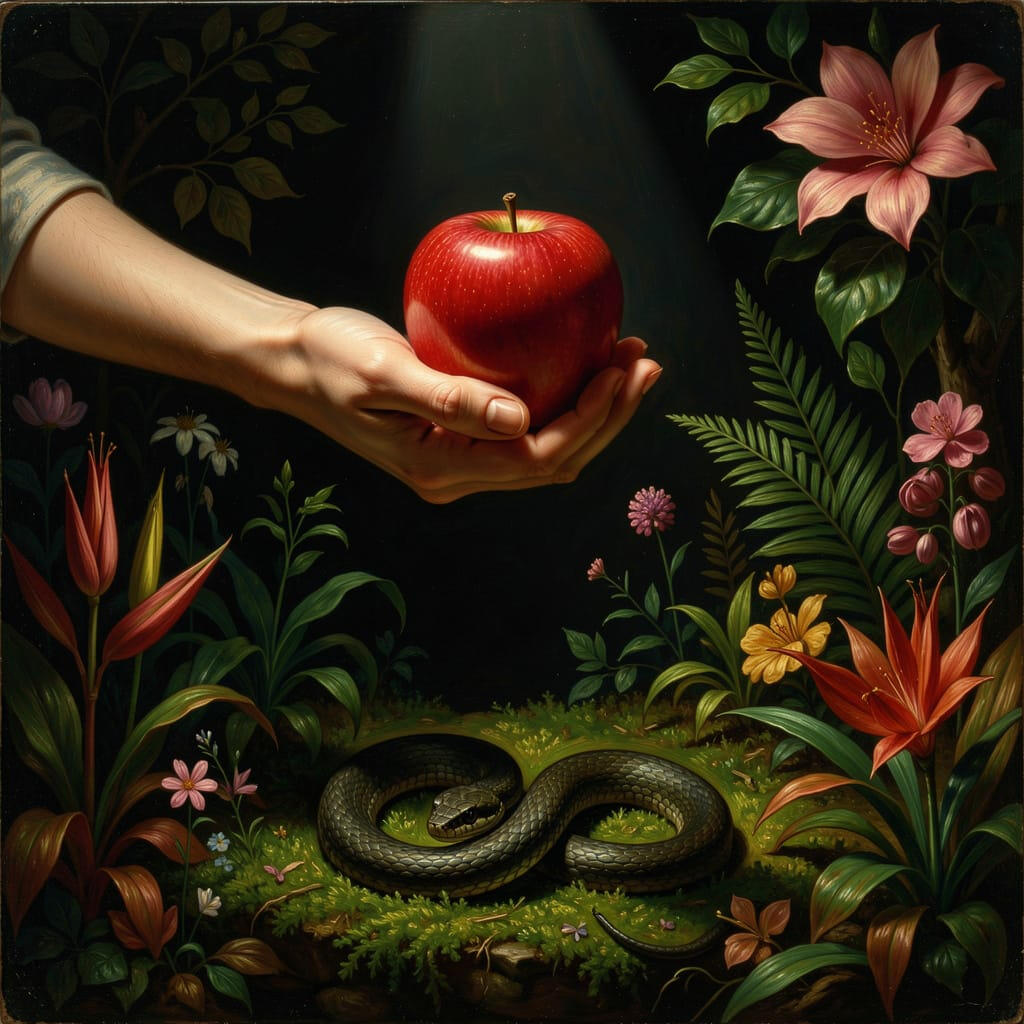
Temptation is everywhere – especially when you are trying not to do something that has become a habit. It comes in many different shapes and sizes, and when it rears its ugly head, we need to plant our feet firmly on the ground and become rooted, stubbornly refusing to budge. That’s the only way to succeed. Plants have root systems. We need them too.Do not wait for the moment to strike. Have the system in place before temptation comes, because it will come. Our society has normalized alcohol, in particular, to the point that many feel a "need" to drink when one is stressed, or down, or to “be social.” We know that sometimes the person in the group without the drink is questioned, teased, or hassled because they are not drinking also. (I have often wondered if a person who chooses not to drink is the cause of some conviction on the part of the drinkers. If so, more power to us!)Temptation has been part of the human condition since the beginning. Just look at the very first temptation that existed, it was enacted through a lie. The enemy directly contradicted God, and he was really good at making it sound like a truth! Who would die so they could have extra knowledge or eat even the sweetest fruit that ever existed? That’s just what Satan convinced Eve to do. Adam, by the way, was not part of that lie - he was a willing participant because he was basically "peer pressured" into it. They were both aware of the consequences yet they jumped in with both feet without much resistance at all.It’s no wonder it’s so easy for him to cause our downfall. These were the original humans… who walked with God… in the Garden! The rest of us must surely be easy to tempt compared to them. But we have no excuses either. Paul tells us in Corinthian 1, verse 13, “No temptation has overtaken you except what is common to mankind. And God is faithful; he will not let you be tempted beyond what you can bear. But when you are tempted, he will also provide a way out so that you can endure it.”We can avoid temptation. We are equipped. We must stand our ground.

Temptation is a large part of the human experience as we discussed yesterday. It has existed for the entire time we have existed. But God has equipped us to be able to avoid temptation.One way we are equipped is by watching how, in Matthew 4, Jesus is tempted by the enemy and what He does to resist temptation. Here, Jesus has been fasting for 40 days. This places Jesus in a vulnerable state both mentally and physically. He is human, after all. Notice, Satan doesn’t hit Him until Jesus is in that vulnerable state. (He’s tricky! He knows the ins and outs of humanity. He was likely right by God’s side when we were created.) We see Jesus being tempted spiritually, mentally, and physically.
In Matthew, chapter 4. Satan begins by saying, “If you are the Son of God, then turn these stones to bread.”
Without missing a beat, Jesus hands him… Scripture! That’s why God’s Word is so vital a tool for us!
Jesus instantly goes to what He knows to be true, and says to Satan, “It is written, ‘Man shall not live by bread alone, but by every word that proceeds out of the mouth of God.’” (Referencing Deuteronomy 3:8)Satan then challenges Him and says to Him, "If you are the Son of God, throw yourself down, for it is written, "'He will command his angels concerning you,' and "'On their hands they will bear you up, lest you strike your foot against a stone.'"But Jesus doesn’t even blink, before He dishes more of God’s words to the enemy, “It is also written: ‘Do not put the Lord your God to the test.’” (Again, in the span of minutes, Jesus shows us that when we are tempted, the Word of God has power as He references Deuteronomy 6:16.)In the devil’s final attempt to tempt Jesus, he tries power. He takes Jesus up further to a high mountaintop, shows him the whole world and says, “All these things will I give you, if you will fall down and worship me.”Jesus turns a final time and answers, “Away from me, Satan! For it is written: ‘Worship the Lord your God, and serve him only.’”Even in a weakened state, Jesus has the Word so written on His heart that He is able to use it, and use it forcefully! (We know He is in a weakened state because in the very next verse (11), it says, "Then the devil left him, and behold, angels came and were ministering to him." He needed physically assistance, at the very least - and God provided it.) There are quite a few lessons in the encounter Jesus has with Satan here. Not the least of which is if we are able to pull from our hearts and minds the Scriptures we store there, we can resist the enemy the same way.It is clear that in the process of avoiding temptation, the very first thing on our list should be to (know and) use God’s Word to provide us with the strength we may not necessarily have in the moment.

Creating
Our
Righteous
Expedition
To stay steady on this path, we must anchor ourselves in "CORE" scriptures. These aren't just verses to memorize; they are the exact maps, provisions, and defense strategies for Creating Our Righteous Expedition. When temptation tries to derail your journey, these verses keep your compass pointing directly to Christ.These “CORE” verses will help us stand firm in the face of temptation. Here are a few suggestions:1 Corinthians 10:13 “God is faithful and will always provide a specific way of escape so you can endure.”
James 4:7 “Submit yourself completely to God, resist the devil, and he will flee from you.”
Matthew 26:41 “Watch and pray continually, for the spirit is willing but the flesh is weak.”
2 Timothy 2:22 “Run from youthful lusts and actively pursue righteousness alongside a pure community.”
Proverbs 4:14-15 “Avoid the path of the wicked entirely; do not turn toward it, but pass on by.”
Psalm 119:11 “Hide God's word deeply within your heart as a shield to keep from sinning.”With the phrase "Creating Our Righteous Expedition," we can help focus ourselves on those CORE scriptures so we are equipped with the Word of God as we are forging our sobriety.
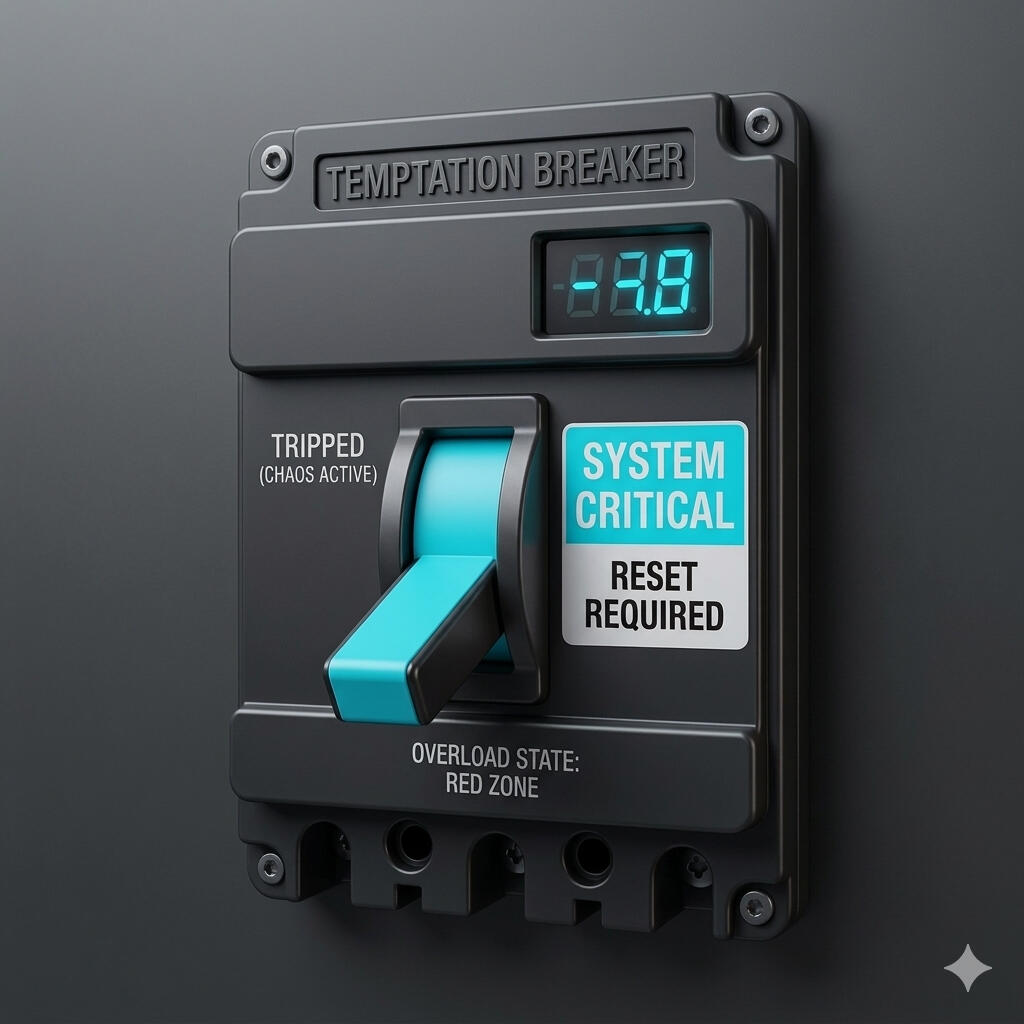
Let's be prepared for the temptation and the cravings that we know will come. The more prepared we are, the more success we will have. If we wait until the cravings hit, it may be too late! Below, find an "Emergency Reset" card that you can take a screenshot and have handy for when that moment inevitably comes.
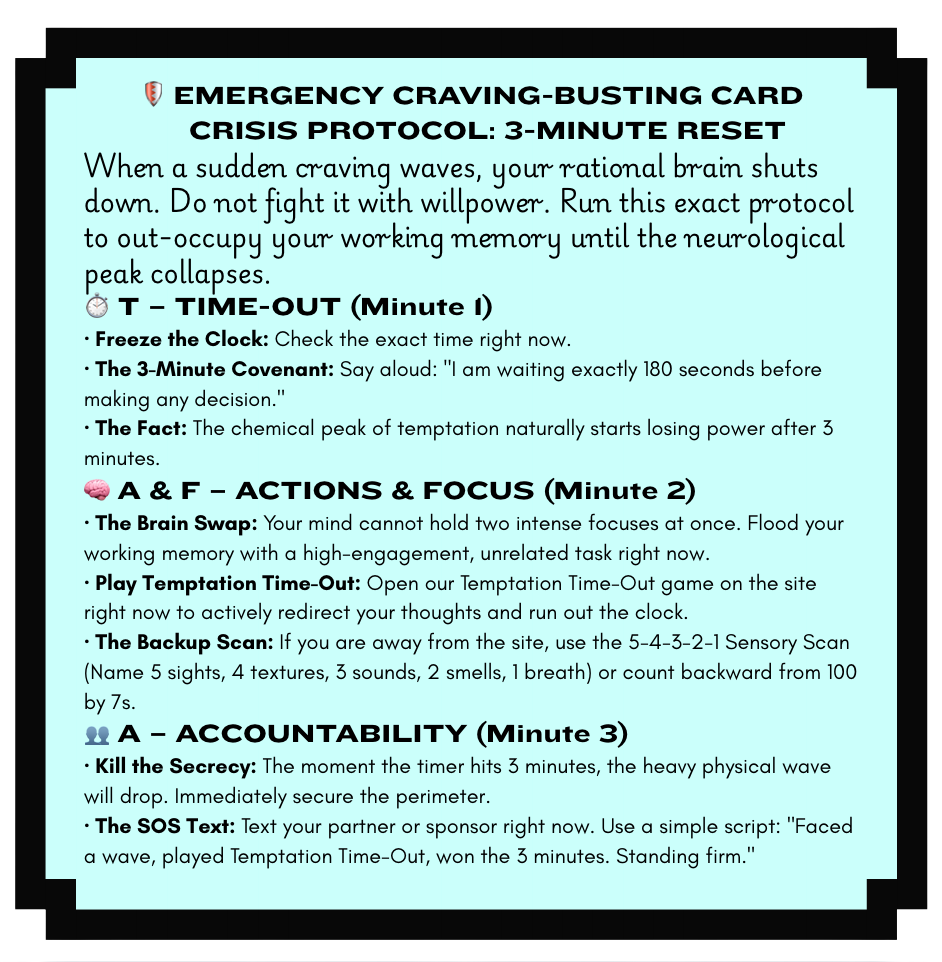
As you conclude your T-A-F-A Reset Protocol, let's look at an encouraging verse and say a prayer of thankfulness!"He lifted me out of the slimy pit, out of the mud and mire; he set my feet on a rock and gave me a firm place to stand." Psalm 40:2
"Father, thank You for pulling me safely through this wave. Thank You for providing a clear way of escape and for guarding my mind when the craving felt overwhelming. I praise You that my sobriety is secure in Your hands, and that You have given me a firm place to stand today. Renew my strength as I continue moving forward on this righteous expedition. In Jesus' name, Amen."
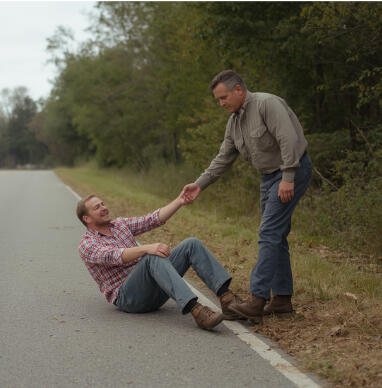
Accountability is a large piece of sobriety. This is why both AA and CR incorporate accountability components into their structures for recovery. The thing is, it’s a part of our sobriety journey that we can easily become resistant to because of pride. We don’t want to admit our faults; who does? But that is precisely why we must force ourselves to stay accountable. No one can force us to be accountable other than ourselves.As Christians, we are called to be accountable. Just a few verses where we are encouraged to be accountable are the following:James 5:16 ESV
Therefore, confess your sins to one another and pray for one another, that you may be healed. The prayer of a righteous person has great power as it is working.1 Thessalonians 5:11 ESV
Therefore encourage one another and build one another up, just as you are doing.Proverbs 27:17 ESV
Iron sharpens iron, and one man sharpens another.Ecclesiastes 4:9-12 ESV
Two are better than one, because they have a good reward for their toil. For if they fall, one will lift up his fellow. But woe to him who is alone when he falls and has not another to lift him up!Accountability is so important because relying solely on our personal willpower eventually fails from decision fatigue and stress that inevitably weaken our internal resolve. When we are accountable, we transfer some of the burden of constant decision making onto a structured framework which drastically increases the likelihood of long-term sobriety.Choosing a reliable, trusted accountability partner (whatever the name for this person is; sponsor, mentor, peer-partner) is important because this will be the person who can help shoulder the burden of that decision-making and any weaknesses that come up along the way. It's important to find the right person to be your sponsor, mentor, accountability partner, because a personality clash can cause us to stumble. We must choose a person who truly makes us feel encouraged and strengthened when we go to them for accountability and help.

Sobriety is a huge climb. We should not climb alone. Climbing alone leaves too much margin for error, and too many things can go wrong. Without a partner to lend a hand when you approach a tough spot, the climb is much more treacherous and the danger increases exponentially. There are some important things to consider when choosing a partner for the journey! As you decide on that partner (mentor, sponsor, accountability partner), here are a few guidelines to follow.
🎯 Essential Qualities to Look For
Demonstrated stability: Choose someone who is currently solid in their own recovery, ideally possessing at least one year of continuous, documented sobriety.Complete emotional neutrality: Avoid picking a spouse, romantic partner, or close family member; emotional enmeshment often breeds fear of disappointing you, which leads to hiding the truth.Uncompromising truthfulness: Seek a person who values your long-term life over your short-term comfort and will fearlessly call out excuses or warning signs.High emotional maturity: Your partner must be someone who handles bad news calmly without reacting in panic, anger, lecture mode, or personal condemnation.Absolute confidentiality: They must possess a proven track record of discretion, ensuring that your vulnerabilities are never shared with others under any circumstance.
🚫 Red Flags to Avoid
The "fixer" personality: Steer clear of individuals who try to manage or control your life rather than simply holding you to your own stated commitments.Active or chaotic lifestyles: If someone is currently overwhelmed by their own unmanaged crises, they will lack the mental bandwidth to consistently show up for you.People-pleasing tendencies: Avoid friends who struggle with confrontation, as they will likely accept weak excuses and compromise your safety.
⚙️ Setting Up the Partnership for Success
Once you identify the right person, establish clear operating guidelines during your very first conversation to prevent misunderstandings.
1. Define specific boundaries: Agree on exactly what you are asking them to track, such as specific habits, device usage, screen time, or emotional triggers.
2. Schedule structured check-ins: Set a fixed, recurring day and time each week for a formal review, rather than relying on random, casual text messages.
3. Establish a relapse protocol: Decide ahead of time exactly what concrete actions will be taken if you slip up or stop checking in entirely.
"As iron sharpens iron, so one person sharpens another." Proverbs 27:17
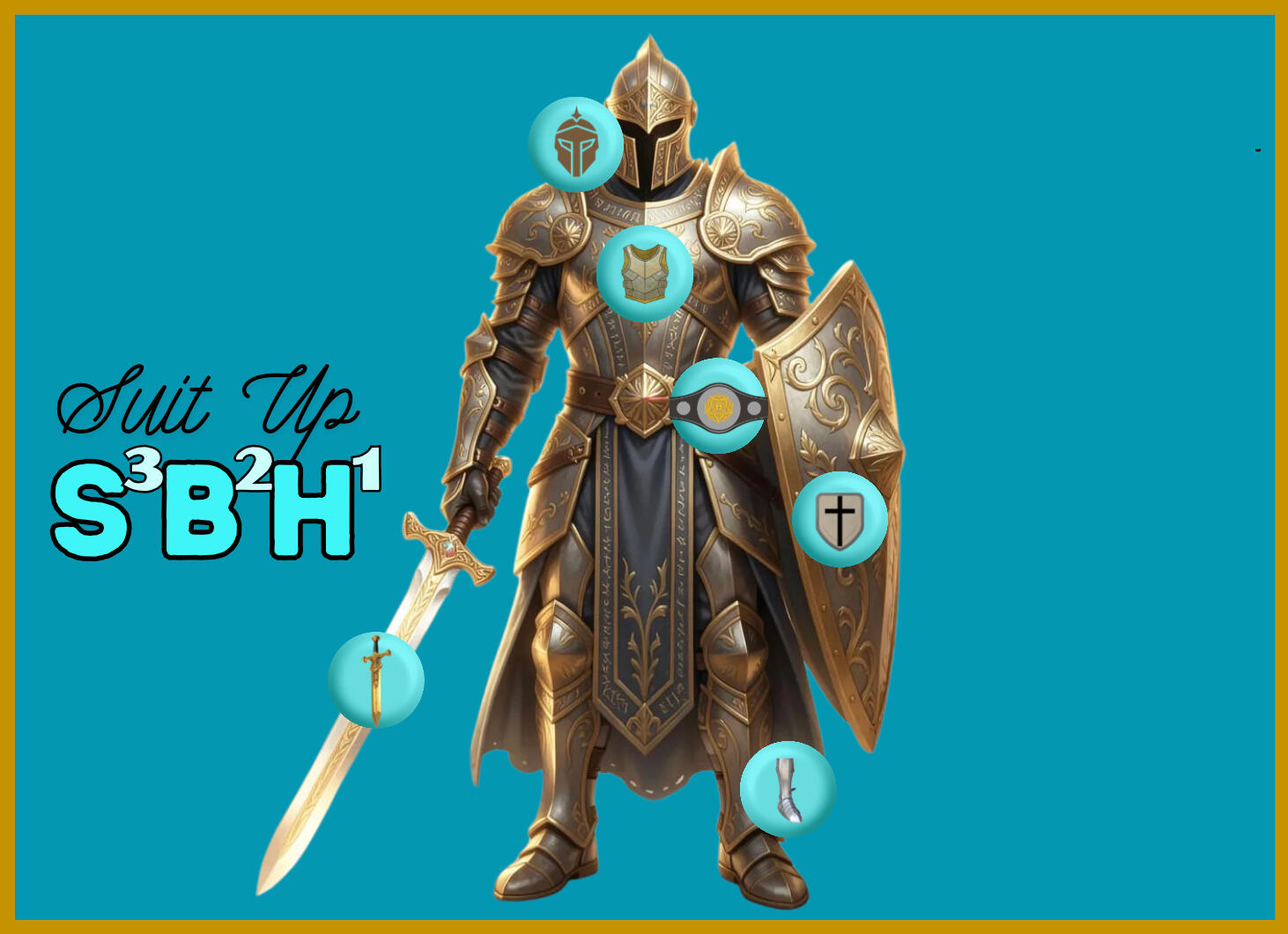
Sobriety is neither won nor maintained by accident. True, lasting freedom requires a daily, active commitment to spiritual warfare, willful resistance, and our willingness to follow through with our commitment to sobriety. In Ephesians 6, God equips us with an unshakeable master defense system to withstand the fiercest waves of temptation. But armor only works if we actually wear it.
Using this memory help;S.S.S. B.B.H. (S3B2H) to actively “suit up,” we can mentally and spiritually prepare ourselves before stepping on the battlefield of every day choosing sobriety. This isn't a passive exercise; it is a proactive strategy for battling addiction as well as the other daily challenges we encounter.The memory device we have for our armor is S3B2H1 (sword, shield, shoes, breastplate, belt, and helmet). Recalling our armor in vital to a Christian. It enables us to stand firm when the world and its many pitfalls, obstacles, and challenges arise. First, the helmet of salvation, gives us the ability to recognize dangerous situations. The belt of Truth gives us the discernment for what we should do in response. The breastplate provides protection and guards our hearts from the attack (which can be many things, but in our journey to sobriety, it is often the pull to that dreaded substance that has had us in its grips) and keeps us safely inside the boundaries we have set for ourselves. The shield of faith is also essential to prevent the dangers the world presents by giving us a place to abide in safety. Shoes ready with the gospel represents those scriptures that help us stay anchored and protect us by offering guidance and encouragement when times are difficult. With the sword of the Spirit, we can strike down the assailing moments because we recognize them with God’s Spirit living in us and slay them by using it as our strength and ability to do the right thing. Without our armor, the armor of God, we are not as strong and we are more susceptible to the attack and much weaker in our ability to stand firm in our commitment to our sobriety.We find it in Ephesians 6, starting with verse 10: Finally, be strong in the Lord and in his mighty power. Put on the full armor of God, so that you can take your stand against the devil’s schemes. For our struggle is not against flesh and blood, but against the rulers, against the authorities, against the powers of this dark world and against the spiritual forces of evil in the heavenly realms. Therefore put on the full armor of God, so that when the day of evil comes, you may be able to stand your ground, and after you have done everything, to stand. Stand firm then, with the belt of truth buckled around your waist, with the breastplate of righteousness in place, and with your feet fitted with the readiness that comes from the gospel of peace. In addition to all this, take up the shield of faith, with which you can extinguish all the flaming arrows of the evil one. Take the helmet of salvation and the sword of the Spirit, which is the word of God. (NIV)
For a reminder of how we can take action when we are tempted and quickly reposition ourselves in a defensive posture, try using the “Suit Up" section above the calendar.
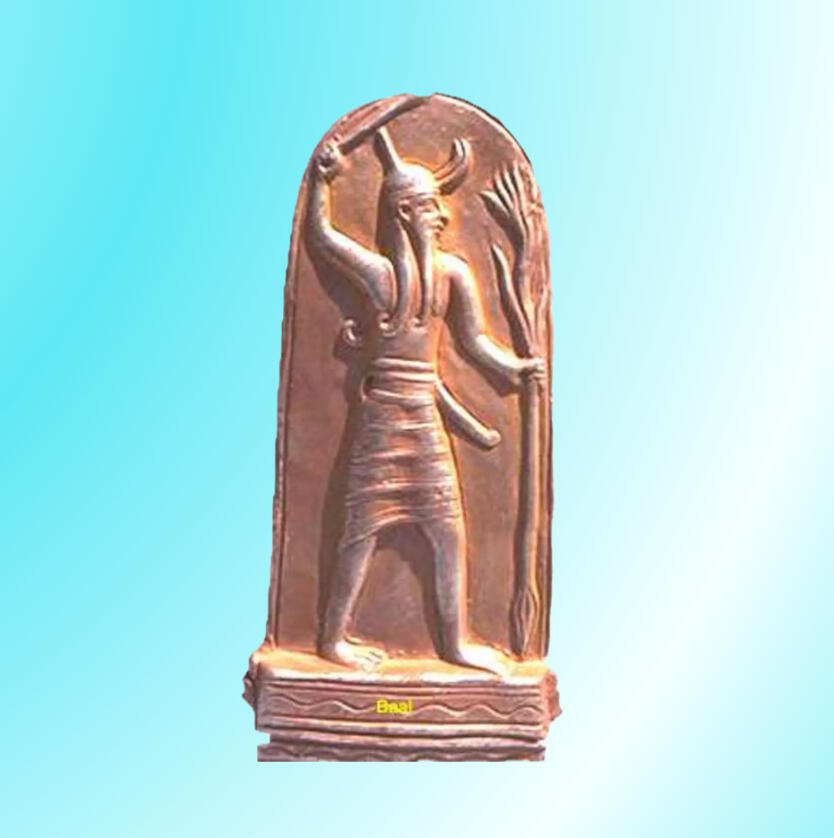
When it comes to addiction, the bottom line is, we have ignored the negative outcomes of our actions and failed to learn from poor choices. Over-indulging in anything that is not good for us precipitates negative outcomes. With alcohol, we get the classic "hangover" as a result of our bad choice. That should be enough to teach us that drinking alcohol to excess is bad. Additionally, God tells us in the scriptures roughly 60 times that we should not get drunk, we should exercise self-control or restraint, or to maintain sobriety (or a sober spirit), the built-in physical lesson is also intended to reinforce good life decisions.Free will is a free gift from God, but it is a responsibility. God gifts us with free will so we can choose to believe, follow, worship, and glorify Him or not. He doesn’t want those things unless we give them freely. Without the freedom to choose, He has a people who are nothing more than automatons (an automaton, if you are not sure, is a relatively self-operating machine or mechanism designed to follow a predetermined sequence of operations or respond to encoded instructions.) Neither side of a relationship like this would be fulfilling. As a result, we have the freedom to choose. But we don’t just have this choice, we can choose how to conduct our lives also. (Because, after all, that is part of worship and glorifying Him.)
As Christians trying to reclaim our lives, we must process the great blessing and responsibility we have been entrusted with and realize the importance of making good use of that free will as an act of honoring, glorifying, and worshipping our Creator. When we abuse the gift by over-indulging, even though we are specifically told not to, we do the opposite of honoring God. That opposite is essentially choosing idolatry (of the substance). Idolatry is among the main reasons God (though He ultimately brought them back to restoration as a people) allowed the Israelites to be taken captive by the Assyrian king. God had to punish their constant rebellion and turning to idols. They, like we, did not learn their lesson. They continually turned to idols, have a bad experience, then come back to God. They would turn right around, and (as a people), choose idols again. Finally, God was fed up with it. He allowed them to be scattered and lose their national identity, even though they are His chosen people.As Christians, who should want to honor God, we must not allow this to happen to us, as well. It is imperative that we learn from our mistakes or we, too, will be censured. Taking that lesson and bringing it forward, Jesus reiterates it when He says, "You shall love the Lord your God with all your heart and with all your soul and with all your mind. This is the great and first commandment.” Matthew 22:37-38 (ESV) (This is the same commandment given to Israel in Deuteronomy 11:12-13.) God still expects our loyalty to place Him first in our lives. We cannot allow other things to take that place.
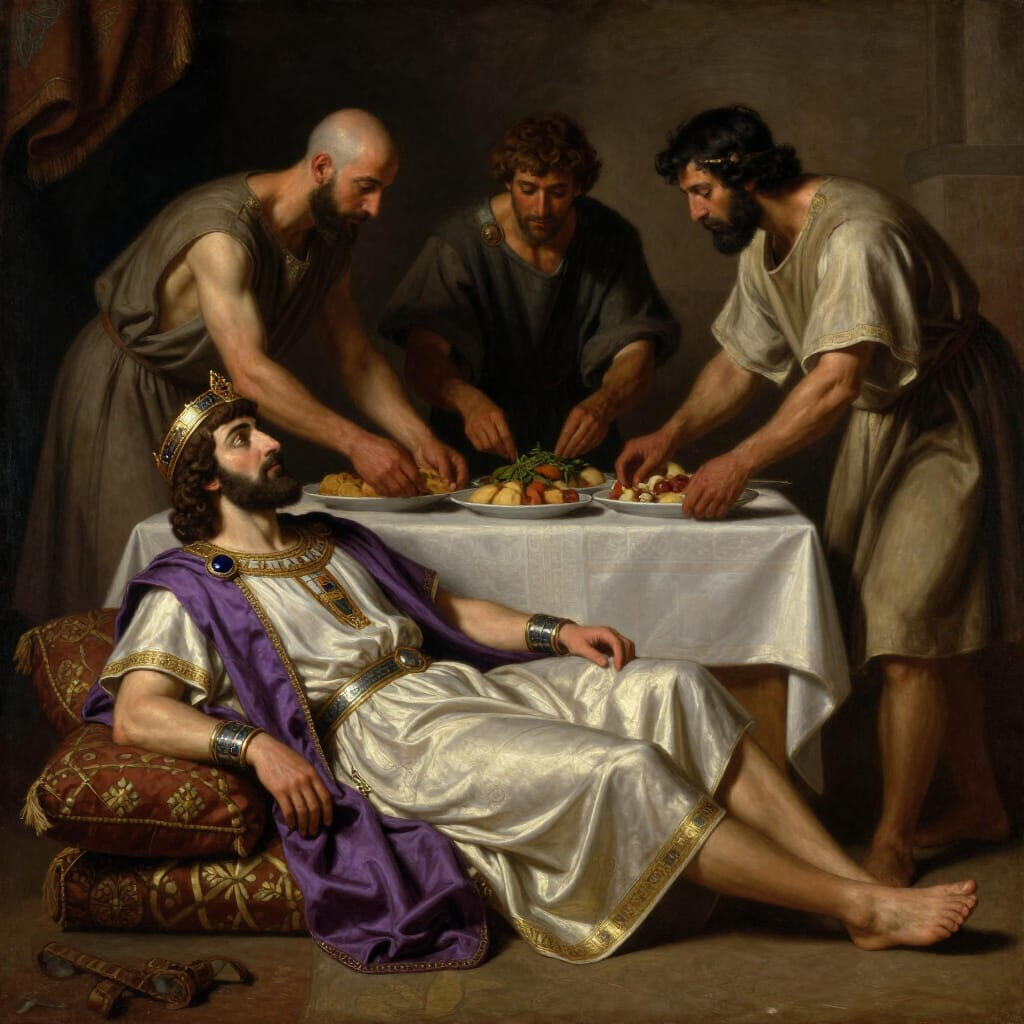
King David understood the idea of consequences and the fact that negative ones should be used as opportunities to learn and improve his relationship with God.When David sees Bathsheba, he does some horrible things. He commits so many sins along the way, but the worst among them (from a human perspective) is basically arranging a "hit" on. Uriah, Bathsheba's husband, when she finds out she is with child. He is trying to cover one sin up with another in this instance.As the king, not many people are likely to call out his behavior, but Nathan, the prophet, goes to him and tells him in no uncertain terms how wrong he's been. Then, he tells him that God has judged his actions and he will be punished for the transgressions. The child resulting from their illicit union will not live.David is in despair. He begs God, for days, as the child is ill and dying, to spare the child. During this time, he remains in prayer and doesn't eat. God, however, allows him to suffer the consequences of his actions, and the child dies. When the servants come into the room and tell him, he stops crying and praying, he cleans himself up, and he asks the servants to bring him food.In Psalm 51, he says, "...you are right in your verdict and justified when you judge." He goes on to say that he wants a clean heart, he asks God to renew him and blot out the sins (so He cannot see them when He looks at David), and that as a result, he will teach other sinners God's ways. This request, God grants. Perhaps David is not asking selfishly this time, perhaps God feels he has learned his lesson, or perhaps, God is teaching us all a lesson in consequences (or probably, all of the above). Or maybe it was this factor, from verse 17, "My sacrifice, O God, is a broken spirit; a broken and contrite heart you, God, will not despise." This seems to be what David believes will help most in reconciling with God; his genuine remorse. Remorse for unrighteous behavior.When we go to the Throne and ask for forgiveness, we must be genuine in our confessions and in asking for forgiveness. David follows by changing. We must do the same.
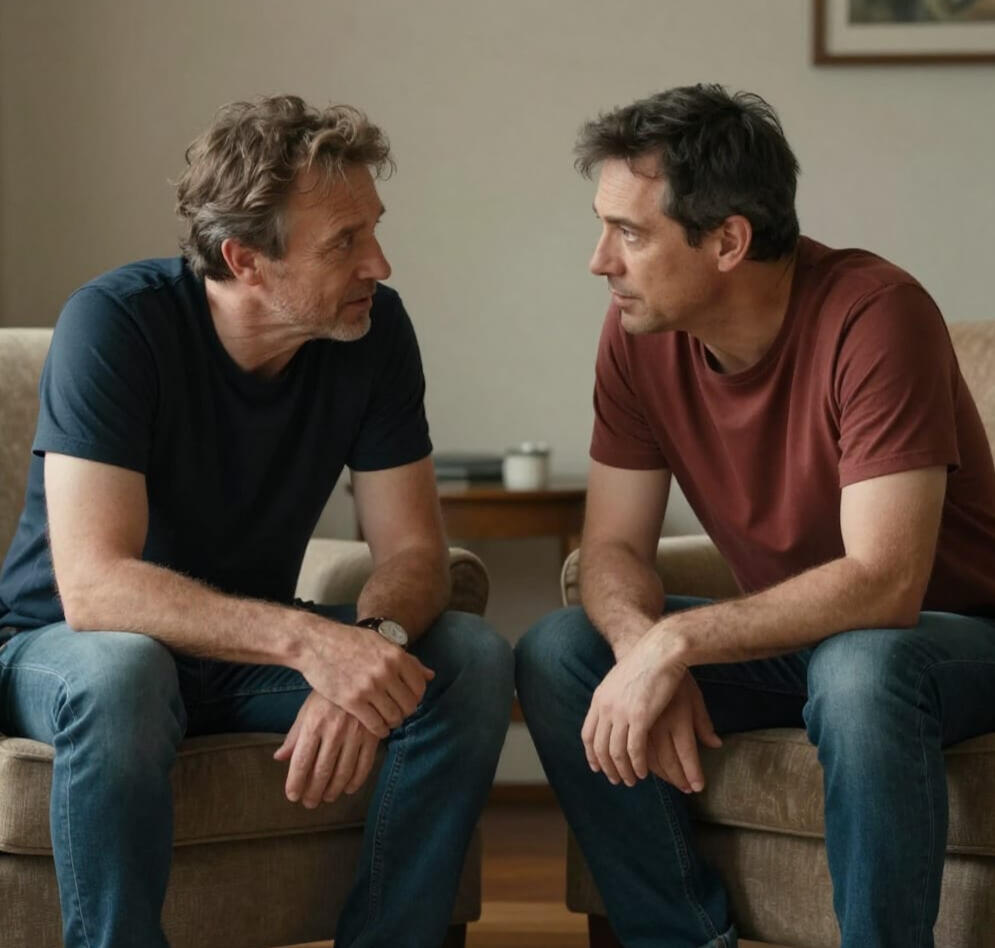
Staying connected is one of the most important safety nets to sobriety. As we have discussed, science tell is that isolation spikes cortisol (stress), triggering cravings. Connecting with a peer fires up mirror neurons and floods your system with oxytocin, instantly calming the amygdala and lowering baseline anxiety.In layman's terms, your brain finds something calming in the faces of others who are struggling with or have been able to overcome the trials and tribulations we are or have been through as well. When we have the support and care of others around us who identify with our difficulties, we are (in any setting) lifted up and we feel better knowing that we are not the only person who struggles with whatever situation we may be in.But staying connected, here, means that we hold ourselves to account. We must make certain that the contact with those people in our lives who do truly understand our struggles, who can call us out when our thinking may be going awry, or who will help lift us back up if we have fallen to temptation. That connectivity helps anchor our recovery because there are aspects of this connectivity that will bolster our ability not to fall (for example, letting people down who are staying connected with us can help us decide not to give in to temptation).Connectivity also means that we can reach for strength from our peers and support system when we are feeling weak. Living in recovery, this is the reason programs encourage mentorships; partnerships. This addiction beast is one that only thrives in isolation. When we have others with whom we stay consistently connected, we are far less likely to fall back into active addiction, and we are much more likely to succeed in recovery.
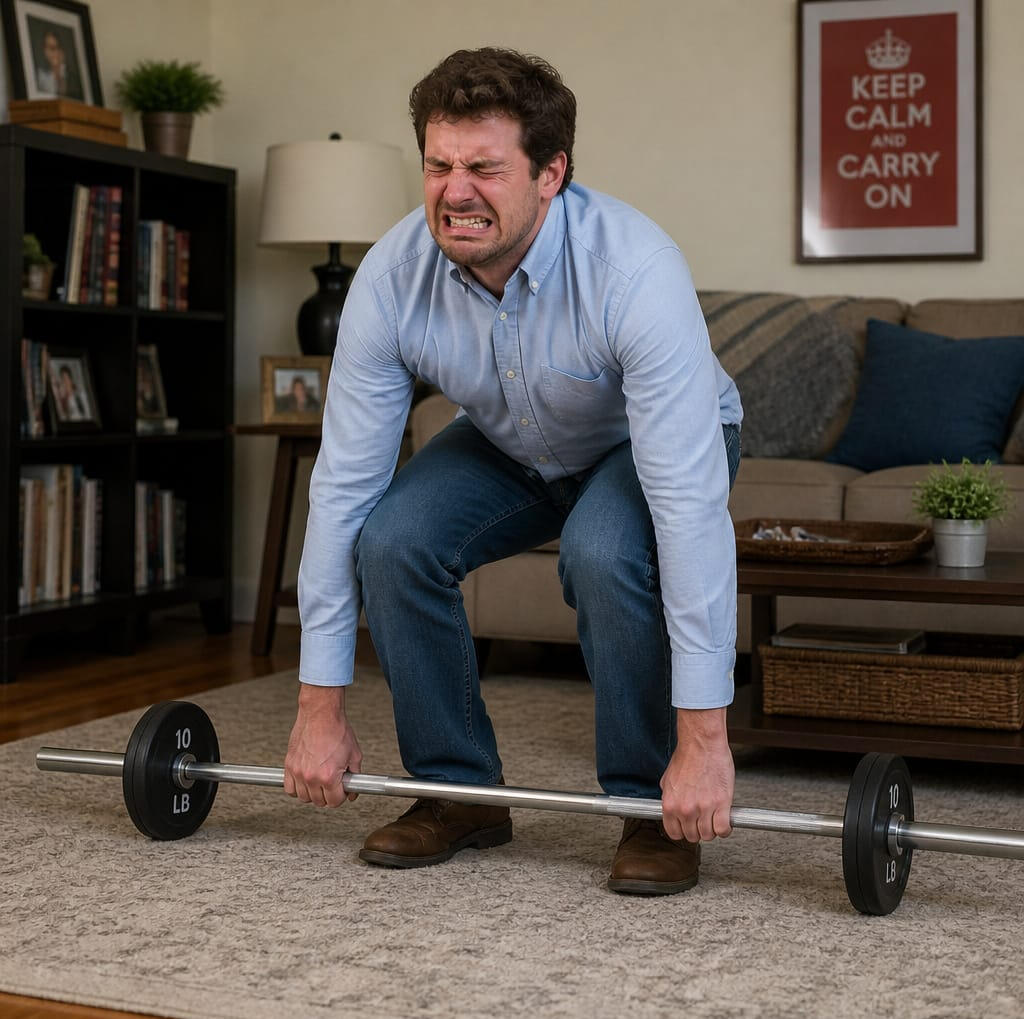
One of the main tenets of community programs touches on the fact that we are "powerless" over alcohol. To some degree, this may be true. When once our brains are corrupted by the substance, it does emerge as a power over us that seems to grab us by the throat and drag us to the bottom of the bottle it resides in. The powerlessness we experience is not complete and it is not a final sentence that is written about our life.We are powerless over alcohol when we are in active addiction. We are powerless to make the temptation of the substance go away completely at the beginning of our sobriety. We are powerless to remove reminders of it from our presence completely. We are powerless over whether cravings happen.We are not powerless over alcohol. Our brains have been rewired, yes. We have dug a deep, deep trench of repetitive behavior, yes. We have made countless wrong decisions, yes. We have lied, manipulated, been selfish, and possibly stolen to get the substance we want. But we are not powerless. God gives us the strength and the armor we need to protect ourselves if we dig deep and cling fast to Him.We may be powerless within ourselves, but we are not powerless against alcohol. God gives us the power to do many things we could never do within our own right. Using God's strength, we have more than enough power to overcome a history of alcoholism. In 2 Timothy, Paul writes, "For God gave us a spirit not of fear but of power and love and self-control." (1:7) In Ephesians, he tells us, "Now to Him who is able to do far more abundantly beyond all that we ask or think, according to the power that works within us, to Him be the glory in the church and in Christ Jesus to all generations forever and ever. Amen. (3:20-21) And, it 1 John 4:4, John says, "You are from God, little children, and have overcome them; because greater is He who is in you than he who is in the world."So, no. We are not powerless when it comes to living a sober life. However, it takes leaning on the Lord and constant vigilance. We must take hold of the tools God provides us with. It is imperative for us to live our lives out in the open - right under the Light of the Father. When that light is on us, we can live freely, knowing He will hold us up when we have no power of our own.
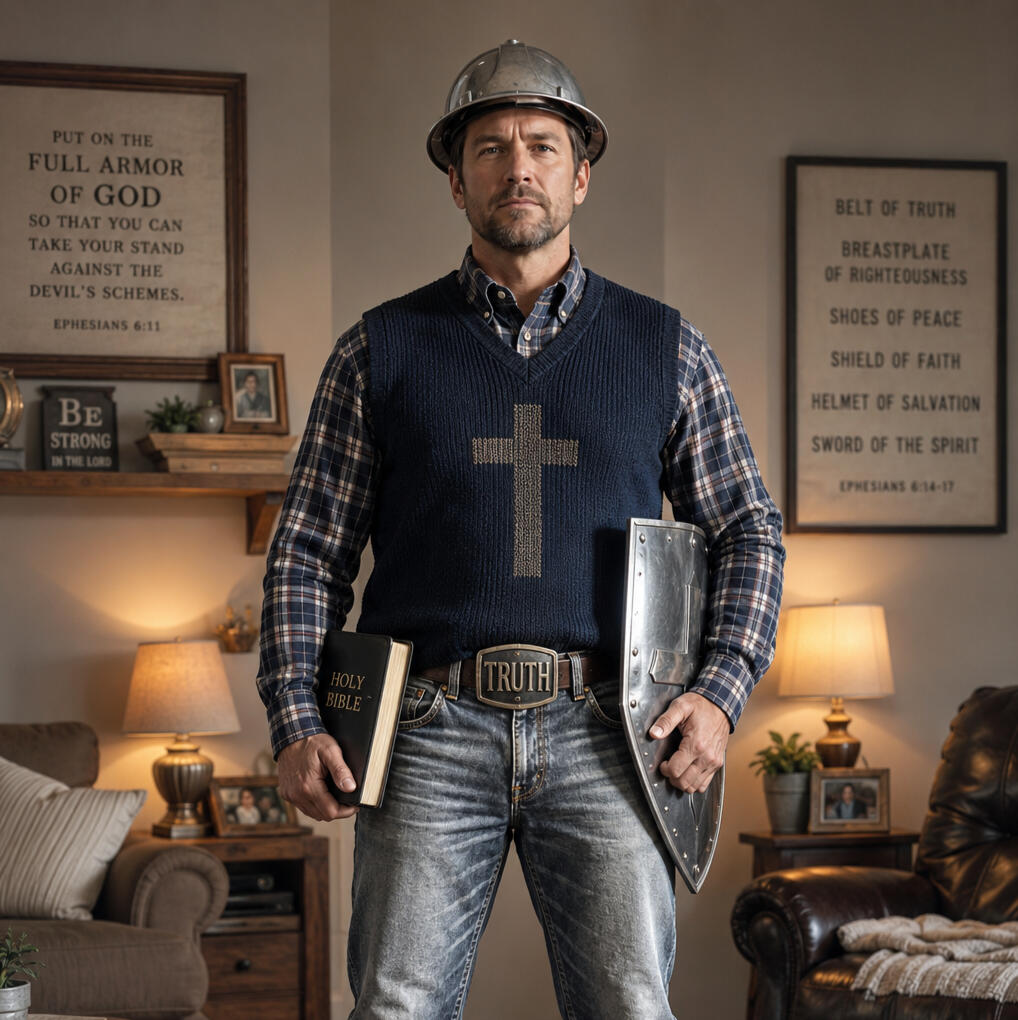
Proverbs 4:23:
Above all else, guard your heart,
for everything you do flows from it.King Solomon pens these words to immortalize the lessons he learned from his parents, particularly his father, King David, in the 10th Century, B. C.While King David is described as “a man after God’s own heart,” the lessons he learns about life are generally learned at a steep price. This lesson flows out of the very messy, very costly, incident when David is indiscriminate in his relationship with BathshebaAfter King David’s indiscretion, he faces some great consequences and a deal of restoration to make to his relationship with God. Throughout the fall with Bathsheba, he makes terrible decisions and gives into temptation because he fails to guard his heart against temptation.Temptation comes in many shapes, sizes, and looks. As Solomon warns us to guard our hearts, he takes those moments of David’s and turns them into valuable life lessons for us. He sees the dangers of an unguarded heart; one that is vulnerable to the temptations life presents.As we learned in an earlier post, we have a foolproof way to guard our hearts with the “Breastplate of Righteousness.” In Ephesians 6:14-17, Paul gives us a very sound practice for how to guard our hearts. Verses 14 through 17 say, “Stand firm then, with the belt of truth buckled around your waist, with the breastplate of righteousness in place, and with your feet fitted with the readiness that comes from the gospel of peace. In addition to all this, take up the shield of faith, with which you can extinguish all the flaming arrows of the evil one. Take the helmet of salvation and the sword of the Spirit, which is the word of God.” Being equipped is the best way to guard against temptation and the schemes of the enemy.This relates to our sobriety because unless we prepared ourselves, our hearts can be drawn right back into the eye of the storm. Not only can we experience temptation, but we can easily fall prey to a false start in our sobriety or even full-blown relapse.
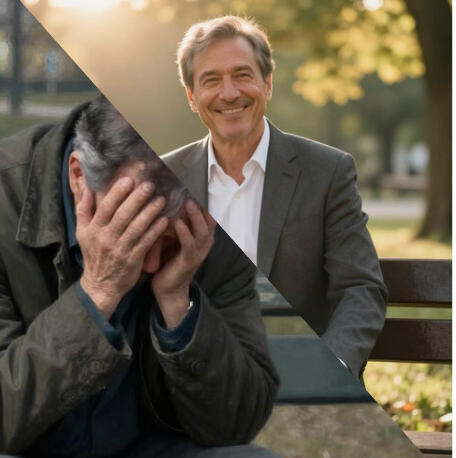
Insanity is doing the same thing over and over and expecting a different result. Alcoholism is one of the most insane processes a person can go through. We get looped into outrageous patterns of behavior thinking that the next time we will be in control. The next time, we will moderate our consumption. The next time, we will be able to say, "No."But it never happens that way. That is because we end up not being able to control the outcomes. It takes more than the desire to change things, because as we know - in an of ourselves, we have no power against alcohol. We do not have what it takes to break the Cycle of Addiction on our own.The fantastic news? God does! It is not until we recognize the fact that we must reach out to God and ask for Him to take the situation over that we will make any headway against the insanity of alcoholism. As we go through the process of a journey toward sobriety, we must learn that He is our only way back to sanity. Paul reminds us of this in 2 Timothy, 7 "For God has not given us a spirit of timidity [fear], but of power and love and discipline [self-control]." We do not have to succumb to the insanity of alcoholism. God gives us a different way. When we lean on Him, he will bolster and support our spirit of self-control.Even though Einstein is sometimes credited with having said, "Insanity is doing the same thing over and over again, and expecting a different result," it actually hails from the 1930s tenets of AA. Go figure.
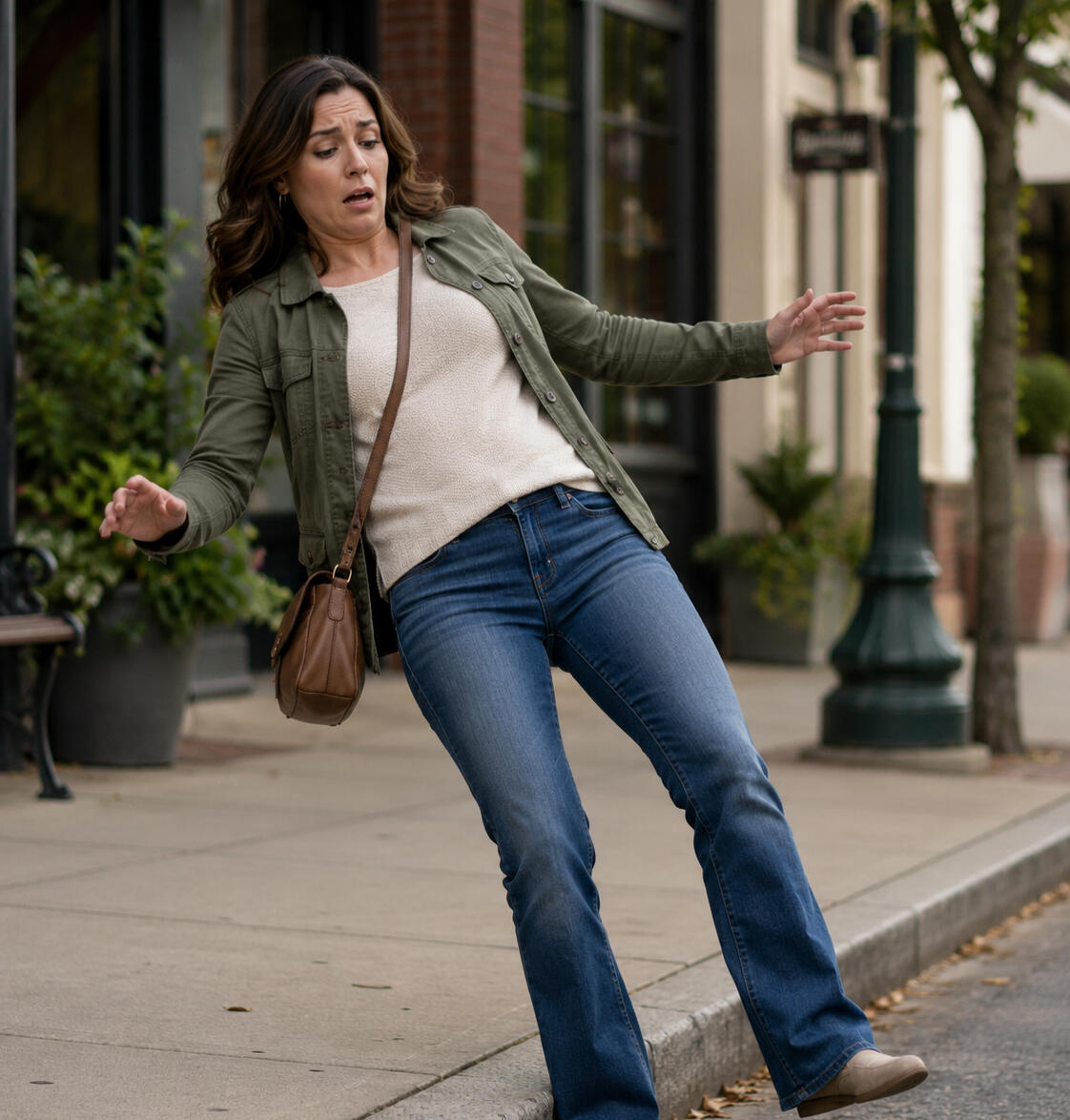
Emotion happens – it’s in our DNA. What is important is what happens when emotion hits us. Frustration, inconvenience, anger, irritation, annoyance, and many other negative emotions can cause us to become off-balance. In those moments when we are knocked for a bit of a loop, we can make a costly judgement error if we don’t pay attention to them. Our choice of reaction to the daily emotional hits we take can make all the difference to our sobriety.Feeling off-balance can be the thing that causes us to reach back to our old, bad responses, and keep us from moving forward to new, better, healthier, more godly choices. In those moments when we feel off-balance. This feeling does not have to send us reeling. When we lose our footing, a strong, firm hand reaching out to help stabilize us can keep us from falling. We may have programmed ourselves to feel we need to respond in particular ways, but that programming can change.When we recognize that we are feeling off balance, we have two options. We can reach back to old things or we can reach out for help. The absolute best help is reaching for the Lord. Psalm 18:30-33 tells us this:“As for God, his way is perfect:
The LORD’s word is flawless;
he shields all who take refuge in him.
For who is God besides the LORD?
And who is the Rock except our God?
It is God who arms me with strength
and keeps my way secure.
He makes my feet like the feet of a deer;
he causes me to stand on the heights.”Our God stands ready to help us. We also have strength from the people we surround ourselves with. When we don’t keep our feelings to ourselves, when we share that “off-balance” feeling with friends, family, and especially God, we can regain our footing instead of falling. Our sobriety is worth it.

One of AA's core 12 steps asks that we admit that life has become unmanageable. Thinking about this statement, it's not possible for an alcoholic to admit anything other than that. In the midst of active addiction, life is a chaotic mess. There is no way to verbally describe the kind of juggling it takes to be an addict. If a person is a "functioning" alcoholic, all that means is they are a better juggler than most. A life in addiction is not worth the "unmanagability" that comes with it. It truly isn't. Just think of all the masterful manipulations, the loathsome lies, the hateful heartache, the stressful salvaging, the sinister sacrifices - all in the name of "feeling good" (which we all know lasts a nanosecond in contrast to the mounds of misery we experience for that nanosecond.)Life, unmanageable? Life ridiculously out of control is more like it. It doesn't matter how good one is at juggling, the devastation is the same. We may "function" for a while, but we won't always, and that day (if we haven't already experienced it) is not a pretty one. Loss of money, loss of friends loss of jobs, loss of relationships.. addiction causes nothing but loss.The beauty of an unmanageable life is that it doesn't have to stay that way. It is not that difficult a transition, either, when we realize the horror of the hole we have dug ourselves. No one wants to be an alcoholic. No one wants to live in chaos. No one wants to lose jobs, friends, and relationships. What we have been fooled into thinking is that we want the "buzz" - to "feel good" - to "numb the ___ (fill-in-the-blank)." What is ours now is to admit the truth to ourselves - that we want an abundant life, free of the chains addiction brings with it.In John 10:10, Jesus tells us, "The thief comes only to steal and kill and destroy; I came so that they would have life, and have it abundantly." God's provision of a Savior frees us from the trap if we truly want it to because, He also tells us, "So if the Son sets you free, you really will be free." Jesus speaks only Truth. He will do as He says. He will free us and give us abundant life, following in His footsteps.

Similar to the way a dog chases its own tail, relapse is a very common occurrence among addicted people. Relapse can be frustrating not only to us but to those who love and care about us. It’s important for us to understand the reason relapse occurs. There are many different stimuli that may act as “triggers” to those who have become addicted to a substance. Those triggers are reminders to the brain of the chemical response that happens when a person partakes in their substance of choice.When an addicted person uses their drug of choice, the reward centers of the brain are flooded with dopamine. This is the chemical in our brains that is the “reward center.” A person basically rewards themselves for their own unhealthy behavior. One major problem with this is that alcohol is unhealthy for us.What happens when we over-indulge in drinking? First, a diminished activation in the reward systems—or a reward deficit—of the basal ganglia makes it difficult for people to experience the pleasures of everyday living. Second, an increased activation of the brain’s stress systems—or a stress surfeit—in the extended amygdala contributes to anxiety, irritability, and unease. Specifically, alcohol can lead to heart disease, liver disease, cancers, car accidents (and other accidents), alcohol poisoning, violence (to include domestic violence), homicide, and suicide – not to mention the negative effects it can have on relationships and social interactions.Alcohol can cause mental health impacts as well. While often, people begin drinking alcohol to ease the symptoms of anxiety and depression, over time, the abuse of alcohol worsens these conditions. Literally, we are reaching for what we believe is the cure, but it is poison in every way. It literally does the opposite of what we believe it is doing. We are robbing ourselves of the ability to be happy.This is why God tells us not to be drunk. God’s intention for us is that we live rich, full lives. Jesus says, “The thief comes only to steal and kill and destroy; I came that they may have life, and have it abundantly.” John 10:10 (NASB) God’s desire is for us to have joyful lives, full of His joy, that gives us strength. He does not want us buried under anxiety and depression. Only recovery will release us to have this joy.
The next step in AA's 12 is turning our lives over to the care of God. (They add qualifiers, but here, we're just going with God because He is the One and Only.)For someone who has never done that, it may feel unfamiliar. But turning our lives over to God's care is the most natural thing to do in the world. After all, going back to our inception as a species, we are created to be in communion with Him and be in a relationship with Him that allows Him to do just that - care for us.In 1 Peter 5, verses 6 and 7, Paul reminds us, " Humble yourselves, therefore, under the mighty hand of God so that at the proper time he may exalt you, casting all your anxieties on him, because he cares for you." This underscores the role God wants to have in our lives. He wants to be allowed to care for us.Sometimes people have the misguided notion that we must "get ready" to turn to God. We must "clean up" our lives to be able to place ourselves in front of the Throne. But, Jesus paved the way straight to the foot of the Throne of God for us, and God wants us there. He sees it all anyway - why would we feel we had to "get ready" to approach Him? While proper reverence should be given Him always, He sees it all. Until and unless we park ourselves at the foot of the Throne and allow the Father to care for us, there is no way for our lives to truly get any better. God's care is the only way.
Jesus declares our identity when he teaches us the "Lord's Prayer." He begins it by saying, "Our Father..." That, in and of itself, tells us who we are. We are God's children. He is our Father. We are His creations, crafted to be in relationship with Him. We may each be different, have different trials, exist with different personality traits, etc., but we are children of the Most High God. When They created us, God said to the Word (Jesus), "Then God said, “Let Us make mankind in Our image, according to Our likeness..."We are not Divine, by any stretch of the imagination, we are "like" (Gen. 1:26) God. The original Hebrew text shows two distinct "likenesses" in the wording here. We are "like" (as in a representation) of Their creative genius. Our bodies, which are from the earth (adam), stand as a physical representation of God's existence. The second qualifier, "according to Our likeness" (from demuth (דְּמוּת), meaning a similarity, a corresponding pattern, or a general outline) is given to express the fact that we are spiritually like Them. We have similar character traits (love, compassion, etc.).Similarly, looking a John's account of the "beginning," it says, " All things came into being through Him, and apart from Him not even one thing came into being that has come into being. In Him was life, and the life was the Light of mankind. And the Light shines in the darkness, and the darkness did not grasp it." (John 1:3-5) Breaking this verse down, we see another detail that is important in our walks with God. The "life" (what animates us and makes us actual "beings") we have the essence of His Light, eternal nature. No darkness (the absence of God's presence) has the ability to "take" or "extinguish" the Light that is the life that animates us because it is God's Light. We must understand the precious nature of the "life" we have. This life does not change when our first life is over. It is of an eternal nature, and the only way it could be extinguished is if God dismantled it Himself. That makes our "life" incredibly important.It is also important for us to break these verses down because it shows us clearly that we do have the qualities we need to conquer the descriptor that we are "alcoholics." Clarifying that we are children of God, who are built in His image and likeness, we possess innately, the "stuff" we need to function properly, at least in some kind of similarity to Him, and it takes that to be able to be in relationship with Him.
Continuing the “label” topic from yesterday, as “alcoholics,” we may have an incredible difficulty with our self-control, but that is a Fruit of God’s Spirit. That means that if we grow closer to Him, and walk more closely in Jesus' footsteps, that trait within us can grow. We are not destined to be alcoholics. We are His children, intended to have a relationship, to work and to serve Him as an outcropping of our worship and praise of His amazingness.So, when we go to a meeting or admit our difficulty with substance, try to remember that we are not more or less than a child of God who struggles with being human. What we must push ourselves to realize is that we have a purpose here. We can't just sit down in the middle of our mess of a life and cry about it. As part of our responsibility of possessing “life,” we should be good stewards of that life, and make it the most fruitful and positive life we can. We have things to do for Him. Paul, in Ephesians 2:10 "For we are His workmanship, created in Christ Jesus for good works, which God prepared beforehand so that we would walk in them."It doesn't matter what our "role" is, it's important. We have a responsibility to take corrective measures in our lives. This is because our lives are eternal in nature. We will continue to progress even after physical (first) death. The farther we come in this life, the more impact we can have in the next one.
As “image bearers” of God (children created to bear His image and likeness), we have the responsibility of presenting an accurate image of who He is. There is, of course, a catch to this.Paul, in Romans 3:10 reminds us that we cannot escape the fact that “It is written, ‘There is no one righteous, not even one.’” (He is quoting Psalm 14:3 in this case he makes against humanity. He is arguing a legal argument that no human being—regardless of their background, legal standing, or personal morality—can claim exemption from unrighteousness. Intriguingly, he changes the phrasing ever so slightly to create a “sweeping finality” of our unrighteous standing without the sacrifice of Christ. In Psalm 14:3, the statement is, “There is none that does good, no, not one." Paul changes the phrasing slightly to “heōs henos” which literally means "down to every single individual." It’s ever so slight an adjustment, but he is pinning it down so it cannot possibly be argued. \This change charges every single person, without a single exception, with the inability to do good without the presence of God through Christ in their lives.
This is our responsibility as image bearers. The responsibility to become footstep followers of Jesus in a way that allows us to be righteous through Him (Jesus). This is why we seek sobriety! This is why we grow in the Spirit! This is our mission - to become the best possible image bearers we can, but to also understand that there is only ONE way to do it.If we leave God and Jesus out of the equation, we will never achieve righteousness. We will never be able to do “good” – not one of us. This is why some people seeking sobriety end up “white-knuckling” it, or becoming merely “dry drunks.” Without the guidance and support of the Living God in our hearts, it will only ever be just an attempt because we can’t do good.This truth may seem a harsh reality, but it is a reality. It is why rehab and AA meetings are not enough to get us to a place of true sobriety. If we don’t stop and first accept Jesus as our Savior, and allow Him to do the work in our hearts, we will not ever be successful. The beauty of that fact should not get lost. We don’t have to be sober. God will make us sober as His Spirit grows within us. What is ours to do is to take the free gift of salvation and allow its transformational power rather than fighting to do something on our own that we are absolutely incapable of doing.
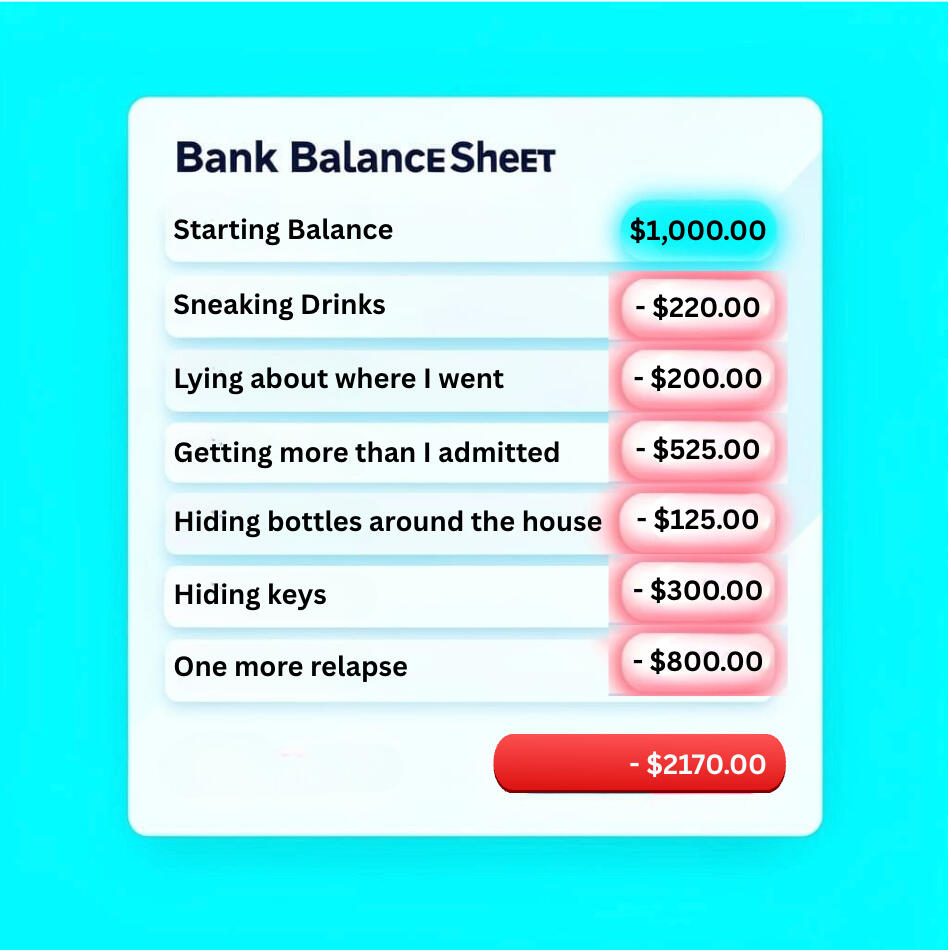
Something important for we, who have brought addiction into our homes, to keep in mind is the incredible strain it can be on the people we love. Whether we are in active addiction or in a state of recovery, it should not be lost on us that we have wrought havoc in our homes. Some of us have brought more havoc than others, but the fact is, we have hurt those who love us. (We will talk about the AA tenet of "making amends" later, but for now, let's just cover the general mayhem that accompanies addiction.)Since we have created this "overdrawn" state, it's on us to do what we can to correct it. If we are in active addiction or early sobriety, it is helpful if we remain alert to the fact that our addiction is as damaging to the others in our home as it is to us. Arguably, it is more damaging to others than it is to us. We are often insensible and/or unaware of the levels of anxiety, depression, anger, frustration, disappointment (and many other things) that we are causing or have caused in our loved ones.Obviously, we didn't just wake up one morning and decide to become an addict, but the fact is, we have. That alone requires that we take responsibility for our actions and do as much, as we recover, as we possibly can to add back to the emotional bank accounts of our loved ones.It is likely that we have been "in the red" for a long time. Just as we do things that cause this "negative balance," we can do things that will begin to move the balance toward the positive. Primarily, it is necessary to own the damage we've caused and make intentional efforts to make certain our family knows they are appreciated and show how thankful we are they have stood by us, especially during our active addiction.Adding to someone's emotional bank account means building trust and love through our actions. It is not merely enough to say the words. We are responsible to build them up, to make some effort at undoing the damage we have caused. We will never be able to erase it, but if we pretend it is not there, and take no actions to right it, we can end up causing major rifts in our relationships that may not be recoverable.
Ways to Build Trust:
• Listen well: Hear them out without interruption and validate what they are saying. (When we listen and say nothing, we may as well not listen. When we listen and respond with validation; i.e. "I hear you. You are saying that when I ___, you feel ___." This gives them proof that you are not just "tolerating" their communication, but you value what they say and the way they feel.
• Be kind: Do small favors or say nice words. Simple words of honest thanks or praise can make a huge difference to a person and change the way they look at you.
• Keep promises: Do what you say you will do. Especially when it comes to your sobriety, don't merely placate them with what you think they want to hear. Say what you mean and do it.Ways to Show Care:
• Say sorry: Own up to your mistakes fast and truly mean it. Do not expect them to return the action. Simply take responsibility for your actions and provide the space that allows your apology to truly mean something to them.
Share feelings: Tell them you value them out loud. It is very easy not to go to the trouble of saying the things we feel. It does not require that much effort on our parts to lift our family up and make them feel cherished.
• Give grace: Let go of small issues and forgive them when they slip up. Just as they have likely done for you a thousand times, grant them the space to mess up and grant them the respect of being patient.Specifically, to build your spouse's emotional bank account, you need daily, intentional actions that show appreciation, respect, and deep understanding.
Here are some ways to make meaningful deposits into your marriage:Practice Active Appreciations:
• Notice specifics: Thank them for exact tasks like fueling the car or making coffee.
• Praise character: Tell them you admire their patience, work ethic, or kindness.
• Leave notes: Hide short, affectionate messages in their bag, wallet, or car dashboard.Prioritize Focused Attention:
• Put down screens: Give total eye contact when they speak after a long day.
• Learn their world: Ask about their current stress, hobbies, or work projects.
• Create rituals: Spend 10 minutes together every morning or evening just talking.Lighten Their Daily Load:
•Anticipate needs: Take over a chore they hate before they ask you to do it.
•Bring treats: Pick up their favorite coffee, snack, or dessert on your way home.
•Protect their rest: Handle bedtime or morning routines alone so they can sleep in.These are just a few ways we can begin to build a positive balance with the people in our lives who matter most. It's important for us to show the person you love what they mean to us; especially when we have been in a place of active addiction, where more than likely, we have dumped a great many things on them and been "absent" from the relationship.
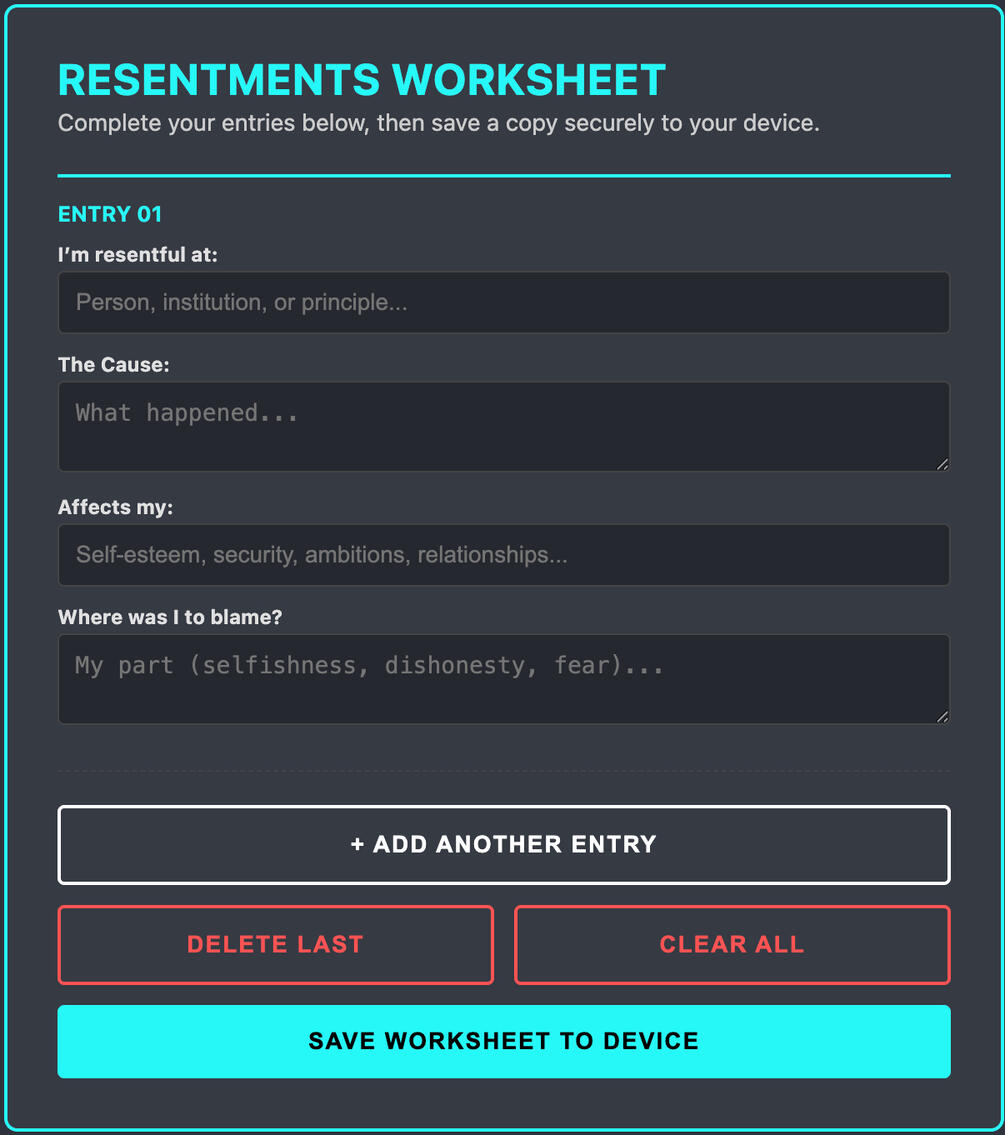
The next step AA takes us to is identification of why lies beneath our propensity to over-indulge in alcohol. Specifically, the idea of the things we resent.
AA suggests that drinking is a symptom of a larger problem. We are spiritually "sick" and need to set things right. When we are mentally and physically "sick," we have to do something to mitigate the damage. So, too, when we are spiritually "sick." To start with, we identify the things in our life that make us feel resentful. According to the AA "Big Book," resentment is the "number one offender" when it comes to identifying things in our lives that can drive us to addiction.
Filling out the "Resentment Form" can be a vital part of helping our recovery move forward. With any issue - mental, physical, emotional, or spiritual, addressing the root cause is the only way for healing to happen. Paul puts it this way in Ephesians: "All bitterness, wrath, anger, clamor [shouting], and slander must be removed from you, along with all malice. Be kind to one another, compassionate, forgiving each other, just as God in Christ also has forgiven you." (4:31-32)
One way to do this is to put things "on paper." Here, you can fill out and save to your device the answers to the: "Resentment Worksheet" (from the AA Big Book.)
Resentment Worksheet
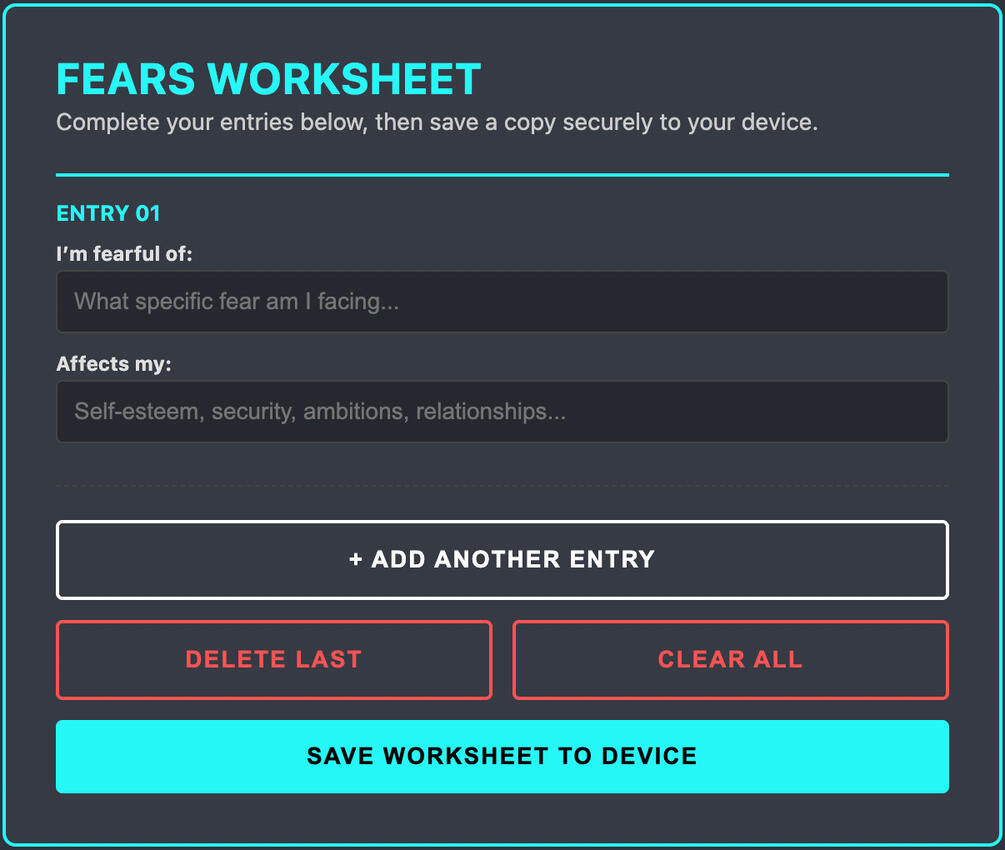
Another thing that can be a root cause of our addictions is fear. Fear can penetrate every area of our lives. Although fear is part of the human experience, the Bible tells us it does not have to be a permanent fixture in our lives. Many things can cause us to have a sense of fear. But Paul tells us, "For you have not received a spirit of slavery leading to fear again, but you have received a spirit of adoption as sons and daughters by which we cry out, “Abba! [familiar - equivalent to "Daddy"] Father!” and Jesus says, in John 14:27, "Peace I leave you, My peace I give you; not as the world gives, do I give to you. Do not let your hearts be troubled, nor fearful."
Although, being human, we have a "fear center"
As with resentments, the AA Big Book offers a place to put our fears "on paper." Here, you can fill out and save to your device the answers to the: "Fear Worksheet" (from the AA Big Book.)
Fear Worksheet